


After a certain point, most SME leaders hit the same ceiling: internal teams are saturated, recruitment becomes increasingly difficult to finalize and organizational problems pile up until they weigh heavily on daily operations.
This situation is frustrating because, generally, you know exactly what is needed: reinforcements on certain positions and better tools to stop losing time on repetitive tasks. However, recruiting locally remains long and costly and putting the right tools in place requires time and skills that many SMEs have not necessarily had the opportunity to develop.
For the past few years, the building of dedicated offshore teams has allowed many European SMEs to break out of this deadlock. Particularly by relying on qualified, French-speaking profiles in Madagascar, they have been able to strengthen their execution capacity at a cost two to three times lower than local recruitment.
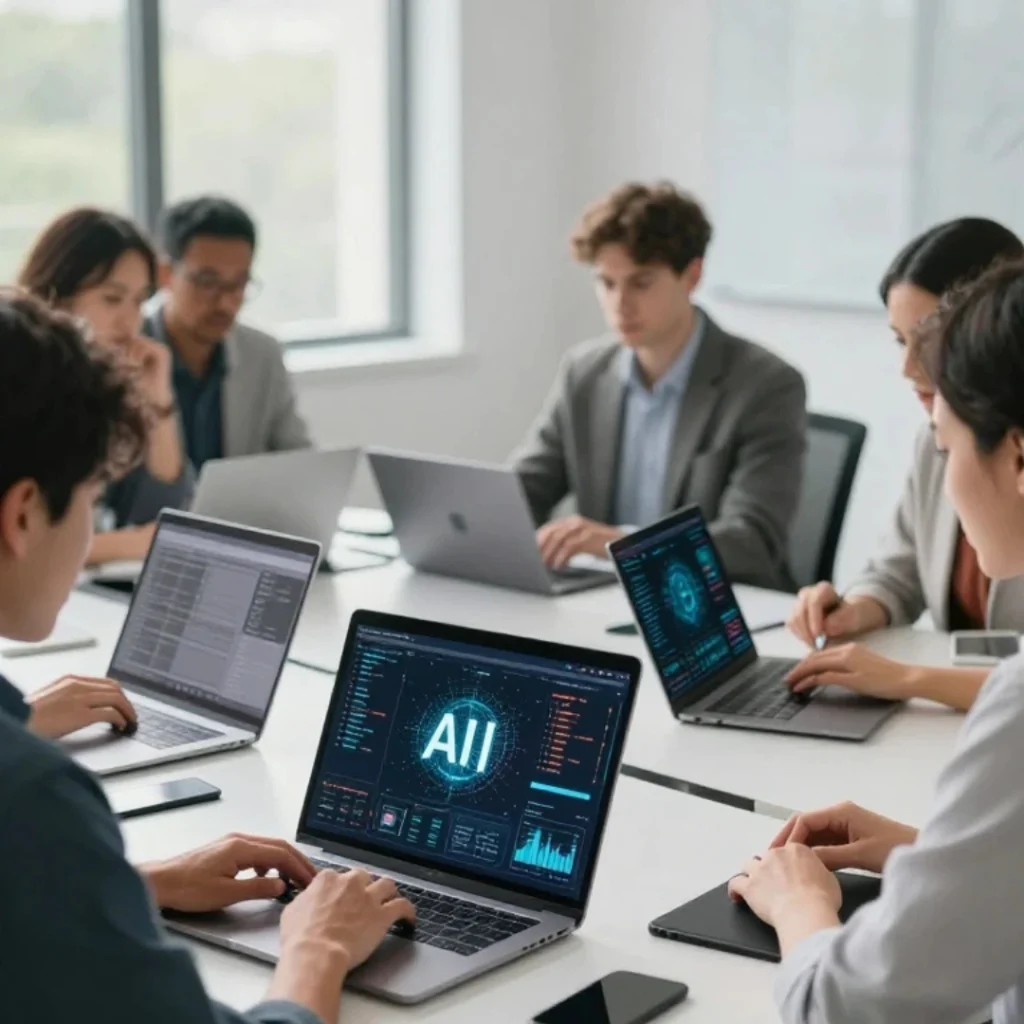
But today, with the rapid rise of AI automation, we can go even further. Automation tools make it possible to reduce the burden of repetitive tasks and improve precision across all operations.
The dedicated offshore team and AI automation duo is becoming a key growth lever, but one that is still largely underused by European SMEs.
What it truly costs to do everything internally and why it holds back growth
Recruiting a qualified profile for the ideal position in Europe represents a considerable investment. And it is not only a question of salary: you also need to factor in social charges, equipment, the time spent training the team member and the very real risk of choosing the wrong profile. In the end, the true cost of a failed recruitment often far exceeds what was initially anticipated.
Meanwhile, internal teams are overloaded. Existing team members are asked to absorb more and more, juggling between their usual assignments and tasks that no one else can handle. In the short term, it holds up, but over time, it is not sustainable.
The problem is not a lack of willingness to delegate. It is that recruiting locally takes time, costs a lot and remains uncertain. Truly qualified profiles are difficult to find, and even when you find one, nothing guarantees it will last.
The offshore team in Madagascar: what it concretely handles on a daily basis
Building a dedicated team in Madagascar means accessing qualified, French-speaking profiles, with a time difference of only one to two hours with France or Belgium. Team members who work full-time, in your tools, according to your processes. These are therefore not freelancers on short-term assignments, but genuine long-term team members.
It is also the possibility of expanding your search scope well beyond the local market, on positions where qualified profiles are generally hard to retain.
A dedicated offshore team in Madagascar can work across several fields, with better continuity. It can for example handle customer support and back-office operations by managing incoming emails, order tracking, follow-ups and complaint handling.
It can also work on IT development by ensuring application maintenance, integrations and bug fixes.
Finally, it can cover accounting and administration by managing data entry, payment follow-ups, file tracking and the preparation of accounting documents.
The result is concrete: internal teams are relieved, operational continuity is ensured and turnover drops significantly.
AI automation: how we reduce our clients’ operational burden
An efficient offshore team is already a powerful lever for gaining in operational efficiency. But when combined with well-configured AI automation tools, its impact is even more significant.
AI automation makes it possible to handle what until now took too much time to do manually. Instead of searching for information scattered across multiple files and emails, everything is centralized in a single tool.
AI can for example automatically send client follow-ups by analyzing their behavior, generate weekly performance reports or update administrative files without any manual intervention being necessary.
The objective is not to replace the team with tools. It is to allow the team to focus on what truly has value: decision-making and qualitative production. What is purely repetitive is automated and what requires judgment remains in the hands of the team.
What we then observe is a reduction in errors on recurring tasks, shorter turnaround times and a more consistent quality of execution.
The two combined: what it concretely produces in a European SME
When a dedicated offshore team and AI automation work together, the impact goes far beyond what could have been imagined at the outset.
Each offshore team member becomes more efficient and more precise in their work. The repetitive tasks that were taking up their time are automated, allowing them to focus on what truly requires attention and reflection. The quality of deliverables improves, turnaround times shorten and errors decrease.
AI also makes it possible to anticipate. It analyzes data in real time, detects sometimes subtle signals and helps the team make better decisions before problems arise.
A team member well equipped with AI tools can produce what several team members previously produced without these tools.
What this duo ultimately enables is genuine operational excellence. Teams focus on decision-making and qualitative production, while AI manages what is mechanical and repetitive. The organization becomes smoother and clearer for everyone.
FAQ: questions SME leaders ask us before getting started
Conclusion
The dedicated offshore team model in Madagascar and AI automation are not theoretical promises. These are approaches that European SMEs are using today to reduce their burden, gain in efficiency and work around the constraints of the local market.
What is still rare is for both to be conceived together from the outset. Yet it is precisely this combination that allows teams to focus on decision-making and qualitative production by automating repetitive tasks, making the organization smoother for every member.
This is exactly the approach ScaleMyCrew offers. If you want to know how this model could apply to your organization, contact us to discuss it.
Publié le 13/05/2026