


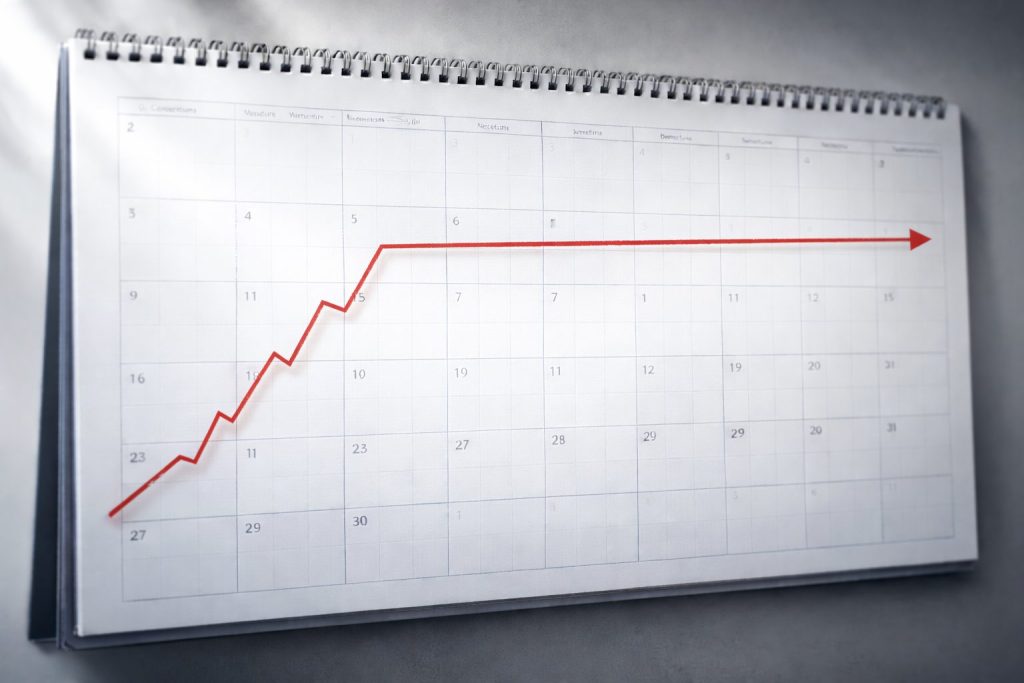
There is a paradox that many SMEs are currently experiencing. The company works. The teams are in place. Clients are served. Processes are established. Results are stable. And yet, the feeling persists that growth is no longer there.
Nothing is going wrong. But nothing is really accelerating either.
This situation is more common than it seems. An organization can be operationally efficient while being strategically stagnant. It optimizes, maintains, secures… but it no longer evolves. Revenue plateaus. Innovation slows down. Ambitious projects are postponed.
Some companies are not even aware of this situation. Some become comfortable in it. But others suffer from it, without knowing how to get out. The real challenge then becomes the following: how to move from a stable organization to a growth-oriented organization?
Moreover, with the rise of AI and also new ways of working, such as offshore, notably the creation of dedicated teams in Madagascar, growth opportunities are more numerous than ever.
The trap of operational comfort
When an SME reaches a good level of functioning, a certain comfort sets in. Teams know what to do. Responsibilities are identified. Clients are satisfied. Routines are efficient.
This comfort is valuable. But it can also become a trap.
An organization that is too focused on operations dedicates most of its energy to maintaining the existing system. It improves processes. It optimizes costs. It reduces friction. But it invests little time in strategic thinking.
Gradually, growth stops being an actively pursued objective. It becomes a consequence that one hopes for.
However, growth does not occur naturally once the company is stabilized. It requires a clear intention, dedicated resources, and an assumed vision. Without this, the organization enters a defensive logic. It protects what it has built instead of preparing the next stage.
A company can be efficient… but not growth-oriented
The real blockage is often neither a lack of talent nor a lack of resources. It lies in the absence of a vision oriented toward expansion.
An SME can excel in day-to-day execution while lacking medium-term projection. Decisions become cautious. Investments are postponed. Strategic hires are delayed. Innovation becomes secondary.
In some cases, the company simply absorbs existing demand. It does not structure new growth drivers. It does not develop new offers. It does not explore new markets.
However, there are moments when client demand evolves. Some opportunities may arise without the company having the necessary organization to capture them. A growing loss of opportunity then begins to be felt.
It is precisely at this stage that many leaders begin to consider structural solutions: rethinking the organization, integrating new skills, or strengthening capacity through offshore, particularly in Madagascar, in order to free up strategic time.
Because growth requires capacity.
Recreating capacity to restart growth
Restarting growth does not only consist in setting new objectives. It requires creating the organizational conditions necessary to achieve them.
This may involve better internal structuring, clarification of roles, more assertive delegation, or the integration of complementary skills.
Offshore in Madagascar today represents a structuring solution for many European SMEs. When designed within a dedicated team logic, it makes it possible to absorb operational workload while maintaining a high level of quality. This model frees up strategic bandwidth.
But capacity is not limited to human resources. It also concerns tools.
AI plays an increasingly important role in this transformation. Automation of repetitive tasks, predictive analysis, optimization of workflows, performance modeling. Artificial intelligence makes it possible to optimize the existing system while freeing up time for innovation.
An organization that combines human structuring and intelligent tools becomes more agile, more responsive, and more future-oriented.
Growth and organization: an essential alignment
Sustainable growth does not rely only on an increase in revenue. It relies on an alignment between vision, organization, and capacity.
An SME that wants to move to the next stage must question its structure. Does it have the right skills? Are responsibilities clearly defined? Are teams sized for the next phase?
In many cases, integrating offshore resources in Madagascar makes it possible to support this transition without rigidifying the local structure. The hybrid model offers flexibility and stability. It allows increasing capacity without unbalancing the existing organization.
Growth is not a sprint. It is a system.
FAQ — Frequently asked questions about organizational stagnation
Conclusion: moving from a stable organization to a growth-oriented organization
A company that functions well is not necessarily a company that grows.
Stagnation is not a failure. It is often the sign of a model that has reached maturity. To restart momentum, it is essential to reintroduce vision, recreate capacity, and align the organization with clear ambitions.
This involves structuring decisions. A more strategic distribution of responsibilities. The integration of new skills, sometimes through offshore in Madagascar. The intelligent use of AI to strengthen efficiency.
At ScaleMyCrew, we support European SMEs in this transition by structuring dedicated offshore teams capable of supporting growth without burdening the organization.
Growth does not happen by chance. It is built. It is structured. It is managed.
Publié le 20/02/2026